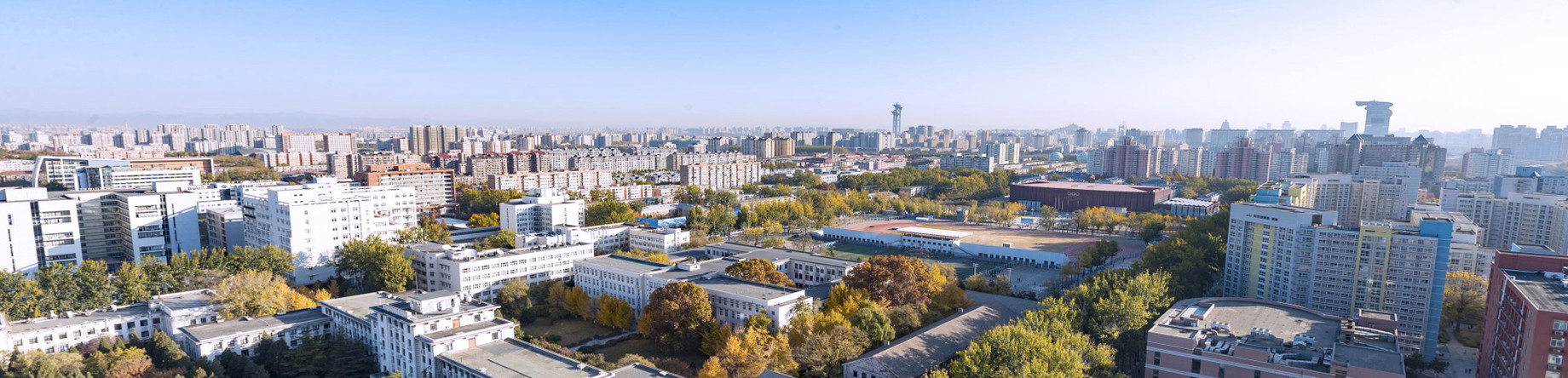
The Master of Digital Economy (MDE) program at the University of Science and Technology Beijing (USTB) is closely aligned with the national strategy of "accelerating the development of the digital economy" and the needs of industrial development. Leveraging the University’s profound disciplinary heritage and distinctive industry characteristics, the program fully integrates the strengths of the School of Economics and Management’s national first-class discipline cluster of Management Science and Engineering and the first-level discipline master’s degree program in Applied Economics, building an interdisciplinary training system "supported by engineering and integrating humanities and sciences." The program is committed to cultivating high-level, interdisciplinary, innovative, and application-oriented digital economy professionals who meet China’s digital economy development needs, possess a strong sense of social responsibility and mission, have an international vision and pioneering spirit, master solid digital economy theories, technologies, methods, and tools, are familiar with the rules and laws of digital economy management, and are capable of performing digital economy-related operations and decision-making with excellent professional competence.
The program offers three distinctive areas of study to precisely respond to societal demands:
Digital Technology and Industry: Drawing on USTB’s mining and metallurgy industry background, this area focuses on the Industrial Internet, intelligent supply chains, and digitalized production, providing solutions for the green, low-carbon, and digital transformation of traditional industries.
Digital Trade and Finance: With a practice-oriented approach, this area studies cross-border e-commerce, digital trade rules and practices, and data-driven finance, cultivating interdisciplinary professionals who can lead the digital transformation of international trade and manage financial risk prevention and control.
Data Analysis and Application: Grounded in the frontier of data science, this area focuses on e-commerce, social media marketing, and user behavior analysis, strengthening students’ capabilities in big data analytics and business decision-making.
A "Four-in-One" Collaborative Education Model: Value leadership and global perspectives are strengthened through value-oriented curriculum-based ideological and political education and international forums. Knowledge delivery is ensured through curriculum systems that stay close to disciplinary frontiers and practical demands. Research literacy and practical innovation abilities are comprehensively enhanced through national-level research projects and university-enterprise cooperative practice bases. Students’ comprehensive abilities to identify, analyze, and solve problems are improved through case competitions and case writing.
An Industry-Education Integrated Practice and Innovation System: Deeply embedded in Beijing’s development as a "global benchmark city for the digital economy," the program jointly builds practice bases with a number of well-known enterprises. Through company visits, job development initiatives, and university-enterprise collaboration, real industrial demands are integrated into the entire cultivation process, ensuring that talent development moves in step with industry growth.
A High-Level Faculty Team with an Optimized Structure: The program brings together a distinguished faculty team comprising principal investigators of national-level projects, outstanding overseas young scholars, and highly experienced industry professionals. Among the team are recipients of national talent awards, New Century Excellent Talents of the Ministry of Education, Ministry of Education Teaching Masters in Curriculum Ideological and Political Education, and Beijing Teaching Masters.
Think-Tank-Led Targeted Social Services: Fully leveraging the location and industry resource advantages of a ministry-affiliated university in Beijing, the program has established a targeted social service system oriented toward the digital economy development of the capital and the Beijing-Tianjin-Hebei region. Research findings have repeatedly received approvals and directives from national and provincial/ministerial leaders. The program has published multiple monographs and authoritative industry reports and has developed a number of patents on digital technologies, demonstrating profound theoretical innovation and policy influence.
The program adopts a "dual supervisor" training model with on-campus academic supervisors and industry (corporate) supervisors. The on-campus faculty team is an international professional teaching team composed of scholars from Renmin University of China, Zhejiang University, Dalian University of Technology, Central University of Finance and Economics, National University of Singapore, Paris Nanterre University, Indiana University, and other well-known universities and research institutions at home and abroad. Many have received honors such as Ministry of Education Teaching Masters in Curriculum Ideological and Political Education, Beijing Teaching Masters, New Century Excellent Talents of the Ministry of Education, the First Prize of Beijing Teaching Achievement Awards, and Young Think-Tank Talent of the China Association for Science and Technology. Industry supervisors come from the China Academy of Information and Communications Technology (CAICT), Tencent Research Institute, Wuxi Digital Economy Research Institute, Baidu, JD.com, Alibaba Cloud, and other relevant industry institutions or well-known enterprises.